
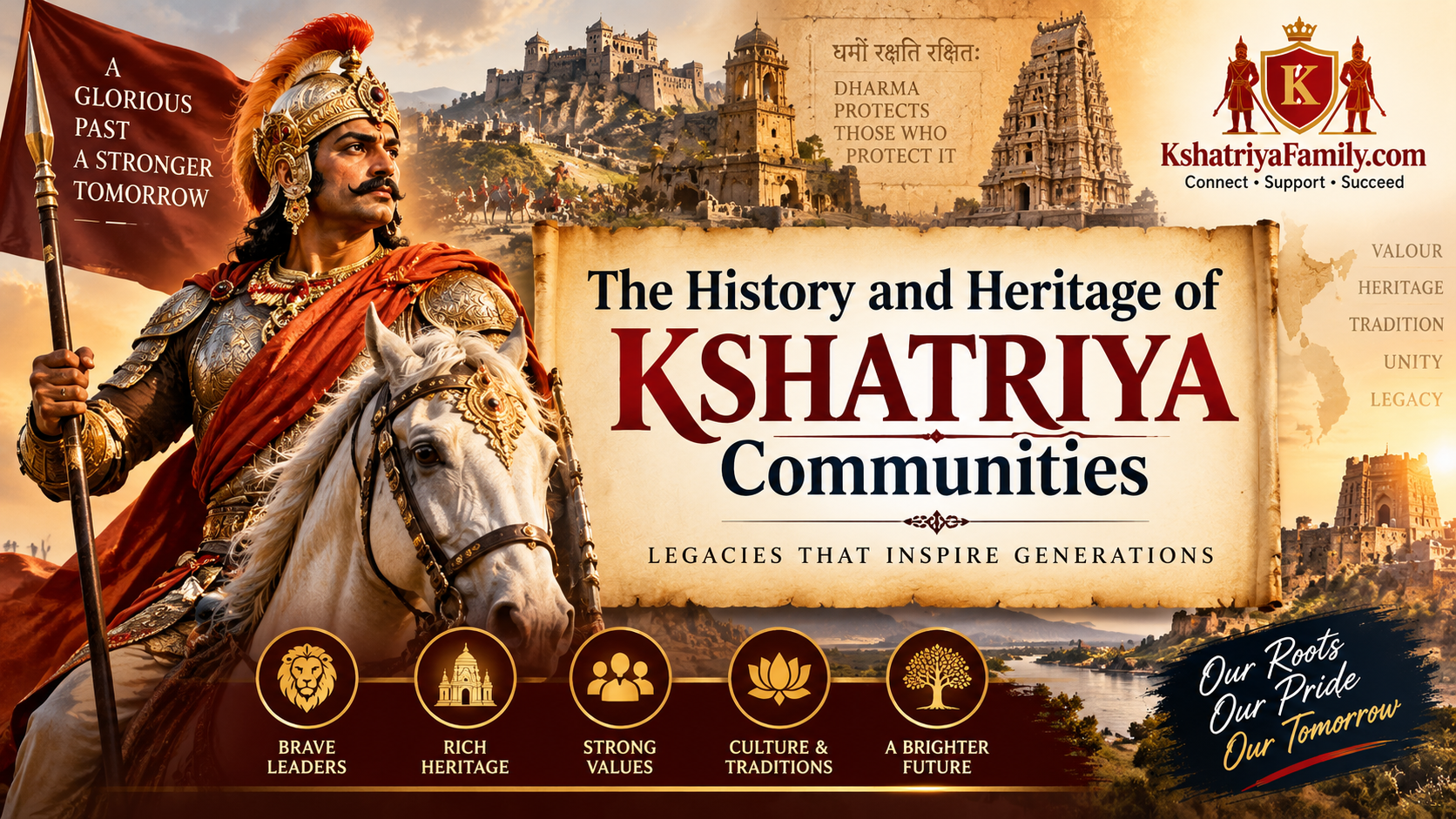
The history of Kshatriya communities is closely connected with India's long and diverse cultural past. From ancient traditions and regional kingdoms to modern society, their heritage has evolved across generations. Today, preserving that heritage means understanding our history, respecting different traditions and carrying valuable family and community values forward.
India's history is a story of many communities, kingdoms, cultures and traditions that developed across different regions over thousands of years. Among the traditions described in Indian social and historical literature, the Kshatriya tradition has a significant place.
The word Kshatriya is traditionally associated with the ideas of protection, leadership, administration and responsibility. Over the centuries, different communities and ruling families across India developed their own identities, customs and traditions while contributing to the country's political and cultural history.
A Heritage Built Across Generations
The history associated with Kshatriya traditions cannot be limited to one kingdom, one region or one family. Different parts of India have their own histories, dynasties and communities with Kshatriya identities.
From northern India to the Deccan and southern regions, numerous ruling houses and warrior traditions became part of India's regional history. Their stories include periods of administration, warfare, diplomacy, agriculture, trade, temple patronage and cultural development.
These different histories make Kshatriya heritage broad and diverse.
The Values Behind the Tradition
Beyond kingdoms and battles, heritage is also about values.
Traditionally, qualities such as courage, responsibility, leadership, discipline, loyalty and protection were associated with the Kshatriya ideal.
For many families, these values continue to have importance even though the nature of society and careers has changed considerably.
Today, leadership may mean building a successful business, serving society, becoming a professional, supporting a family or contributing to the community.
Forts, Temples and Cultural Heritage
Across India, historic forts, palaces, temples, inscriptions and monuments provide reminders of the country's complex regional past.
Many historic rulers and royal families supported architecture, literature, art, education and religious institutions. Their patronage helped create cultural landmarks that remain important parts of India's heritage.
Visiting these places can give younger generations an opportunity to understand history beyond textbooks.
Family Traditions Matter Too
Heritage is not only found in monuments and history books.
It also lives in family stories, celebrations, traditional foods, ceremonies, values and the memories passed from grandparents to children.
Every family may have its own traditions and stories. Recording these stories can help future generations understand where their families came from and how their lives changed over time.
Even a simple family history document containing names, places, photographs and important events can become a valuable record for future generations.
Preserving Heritage in the Modern World
Modern life is changing quickly. Young people are studying and working in different cities and countries, and families are becoming increasingly connected through technology.
This makes preserving heritage more important, not less.
Digital platforms can help families share photographs, stories, historical documents and information about community events. Young people can also use technology to learn about their regional history and connect with others who share similar cultural backgrounds.
Preserving heritage does not mean remaining in the past. It means understanding the past while moving confidently into the future.
Passing Values to the Next Generation
One of the most meaningful ways to preserve heritage is to pass its positive values to younger generations.
Children can learn about their family's history while also developing qualities such as respect, responsibility, education, hard work and service to society.
The world around us may change, but strong family values can continue to provide a foundation for future generations.
A Heritage That Continues to Evolve
Kshatriya heritage is not simply a story of ancient rulers or warriors. It is also the continuing story of families and communities adapting to changing times.
Today, people from Kshatriya communities are contributing to many areas including business, technology, education, medicine, government, agriculture, arts and professional services.
Their achievements represent a new chapter in a much longer story.
Our Roots, Our Responsibility
Understanding history gives us an opportunity to appreciate the people and traditions that came before us. At the same time, heritage should inspire us to create something meaningful for those who come after us.
The strongest way to honour our roots is not only to remember the past, but also to build a better future.
Our history gives us identity. Our values give us direction. And our actions today become the heritage of tomorrow.
← Back to Stories